
Table of Contents
As temperatures climb and outdoor adventures become more frequent, many paddlers are gearing up for long days on the water. Whether you’re inflating a paddle board by the lake, setting up camp with inflatable gear, or traveling off-grid, your electric paddle board pump plays a vital role in your setup. However, summer conditions can present unique challenges. Here’s what you should keep in mind when using an electric SUP pump during hot-weather excursions to ensure both safety and performance.

1. Watch for Overheating in High Temperatures
Hot weather, direct sunlight, and continuous use can quickly cause internal temperatures to rise. Most electric paddle board pumps have internal protection mechanisms, but prolonged operation on scorching sand or concrete can still cause performance issues or trigger auto-shutoff.
How to prevent this:
- Inflate in the shade when possible
- Avoid placing the pump on dark, heat-absorbing surfaces
- Let the pump cool for a few minutes between multiple inflations
- Look for models with built-in fans or passive ventilation systems
GICLE’s high-performance SUP pumps, such as the AP-887LB, feature a dual cooling design with both active and passive heat dissipation, allowing up to 4 hours of continuous operation without overheating—perfect for hot summer days on the beach.

2. Be Mindful of Battery Charging in the Heat
Lithium-ion batteries, especially those found in rechargeable electric SUP pumps, are temperature-sensitive. Charging them in high heat can shorten their lifespan, increase degradation, or in rare cases, pose safety concerns.
Best practices include:
- Charge batteries indoors or in cool, shaded areas
- Never leave batteries inside a hot car
- Use partial charges when full capacity isn’t needed
- Avoid using third-party or unprotected chargers in high-temperature environments
GICLE’s battery-powered models use high-capacity lithium battery packs with built-in safety protections against overcharging, over-discharging, and high temperatures—ensuring safer performance even during the hottest part of the day.
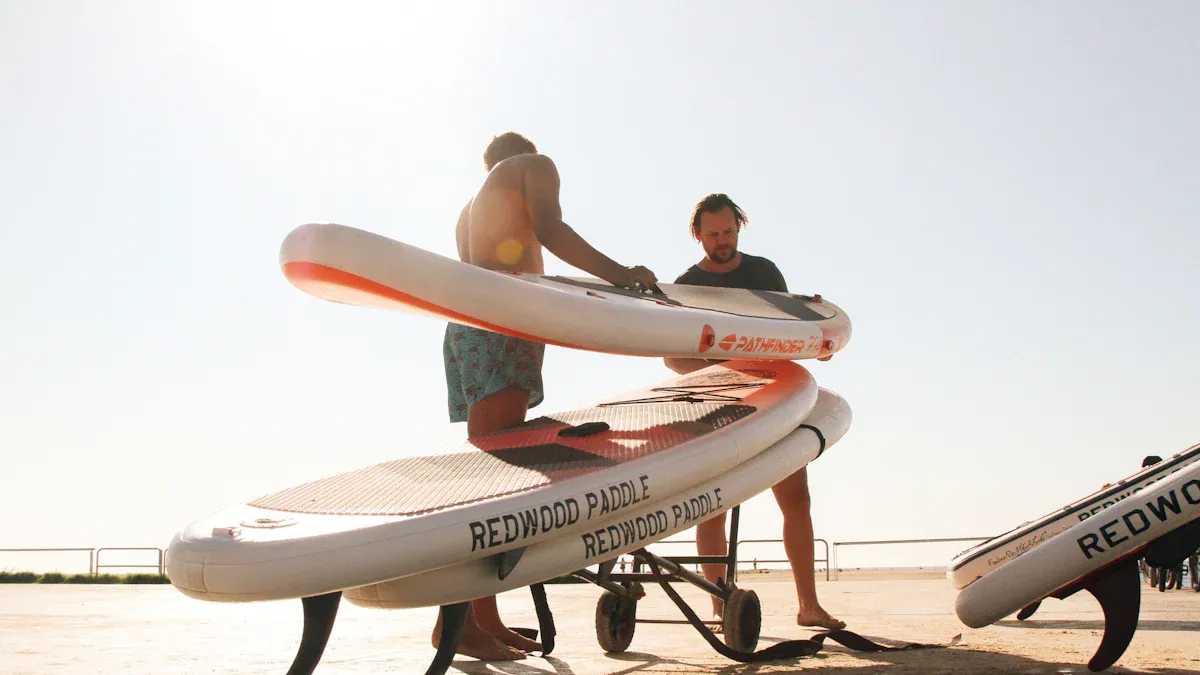
3. Keep Sand and Water Away from Sensitive Components
The beach might be your playground, but it can be a pump’s worst enemy. Sand particles and saltwater residue can gradually impact buttons, nozzles, or internal motors.
To protect your pump:
- Use a towel or board bag as a base while inflating
- Store the pump in its dedicated carry case when not in use
- Rinse nozzle tips with fresh water after beachside use
- Avoid inflating gear while standing in the water
GICLE pumps come with storage bags that help protect your investment and keep components free of damage during transport or storage.

4. Adjust for Temperature-Driven Pressure Swings
Air expands with heat. That means if you inflate your board to 15 PSI in the morning and leave it sitting under the sun, internal pressure could climb by 1–2 PSI, increasing the risk of seam strain or damage.
Recommended actions:
- Set your target PSI slightly lower if inflating early
- Check your board’s pressure again after it’s been in the sun for a while
- Use a pump with a digital pressure readout and auto shut-off
- Know your paddle board’s max PSI limit (usually between 12–22 PSI)
All GICLE pumps feature accurate pressure sensors with ±0.1 PSI precision and auto shut-off settings, giving you confidence even in changing summer temperatures.

5. Plan Ahead for Off-Grid or Low-Shade Locations
Summer is peak season for SUP touring, car camping, and beach hopping—but that also means fewer power outlets and limited shade. In these cases, a pump that supports both DC 12V input and rechargeable batteries is invaluable.
Things to look for:
- A detachable battery pack with enough capacity (4000mAh or more)
- A long cigarette lighter cable (at least 3m)
- Backup charging via portable power banks or solar stations
- Compact build that fits in dry bags or hatches
GICLE’s dual power supply systems allow users to seamlessly switch between in-vehicle power and battery use. Models like the AP-889L come with both a pluggable battery and DC input for total flexibility.

6. Ensure Screen Visibility in Bright Conditions
Under direct sunlight, some LCD screens can become unreadable—especially on older or budget models. This can lead to misreadings or incorrect PSI settings.
Solutions include:
- Choosing a pump with a high-contrast or backlit display
- Ensuring the screen has adjustable angles or glare-resistant coating
- Memorizing the button layout so you can operate by feel if needed
GICLE electric paddle board pumps come equipped with HD LCD displays that remain visible even in direct midday sunlight, so you can set pressure accurately without second guessing.

A reliable electric paddle board pump is a game changer for summer outings, but it’s only as effective as the conditions allow. With a few practical habits—like monitoring temperature, managing battery use, and keeping the device clean—you can enjoy smoother, faster inflations without unnecessary wear.
Whether you’re prepping for a sunrise paddle, inflating multiple boards for a family day, or topping off your SUP in the mountains, following these summer guidelines will keep your electric SUP pump working efficiently all season long.
For outdoor enthusiasts looking for performance and dependability, GICLE electric paddle board pumps offer robust safety features, high-efficiency inflation systems, and flexible power options—making them a top choice for summer adventures.


